Thinking about the sheer number of animals in different phyles who provide dedicated parental care for at least some portion of the offspring's life, it seems to me like the "cute response protects baby" explanation may be putting the cart before the horse, so to speak. There are poison dart frogs who make damn devoted daddies (housing their tadpoles in little pools of water that form in bromeliad leaves, maintaining the condition of the water, and begging for passing females to lay an unfertilized egg so baby can eat it); there are primates who kick the young out fairly early; octopus mothers stop eating altogether (even though they're still capable of it physiologically) and just guard their eggs until they die. Sure, if we want to squee over a helpless baby it WOULD probably improve that baby's survival chances, but I rather suspect that devoted infant care is not a good single-factor explanation here.
(I maintain, however, that jumping spiders are objectively adorable.)
Well, there are clearly behavioral traits other than the cute response that go into protecting human infants; if phenotypical cuteness was the only factor here, for example, there'd be little incentive to preferentially protect your own children. Parents that I've talked to have on occasion described their own kids as apocalyptically cute relative to pretty much anything else, but I'm pretty sure there are things other than phenotype involved here.
I don't think the evidence for a pedomorphic interpretation of cuteness is quite conclusive, but there do see...
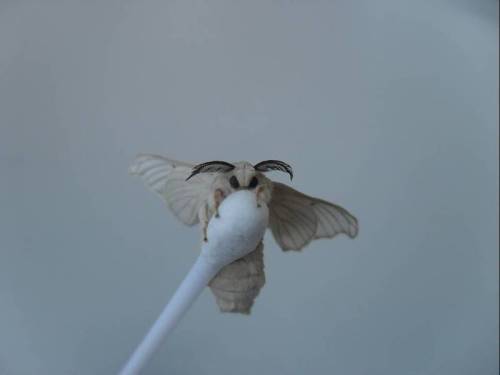
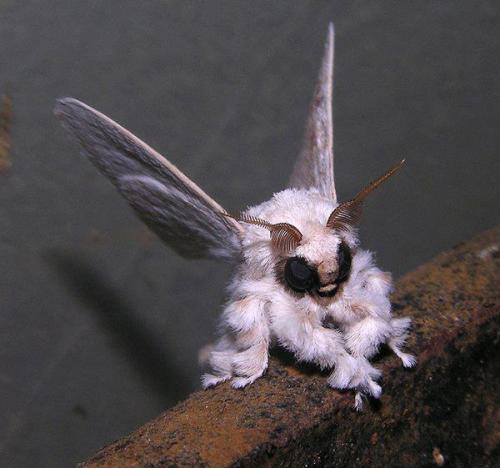
Daniel Dennett has advanced the opinion that the evolutionary purpose of the cuteness response in humans is to make us respond positively to babies. This does seem plausible. Babies are pretty cute, after all. It's a tempting explanation.
Here is one of the cutest baby pictures I found on a Google search.
And this is a bunny.
Correct me if I'm wrong, but the bunny is about 75,119 times cuter than the baby.
Now, bunnies are not evolutionarily important for humans to like and want to nurture. In fact, bunnies are edible. By rights, my evolutionary response to the bunny should be "mmm, needs a sprig of rosemary and thirty minutes on a spit". But instead, that bunny - and not the baby or any other baby I've seen - strikes the epicenter of my cuteness response, and being more baby-like along any dimension would not improve the bunny. It would not look better bald. It would not be improved with little round humanlike ears. It would not be more precious with thumbs, easier to love if it had no tail, more adorable if it were enlarged to weigh about seven pounds.
If "awwww" is a response designed to make me love human babies and everything else that makes me go "awwww" is a mere side effect of that engineered reaction, it is drastically misaimed. Other responses for which we have similar evolutionary psychology explanations don't seem badly targeted in this way. If they miss their supposed objects at all, at least it's not in most people. (Furries, for instance, exist, but they're not a common variation on human sexual interest - the most generally applicable superstimuli for sexiness look like at-least-superficially healthy, mature humans with prominent human sexual characteristics.) We've invested enough energy into transforming our food landscape that we can happily eat virtual poison, but that's a departure from the ancestral environment - bunnies? All natural, every whisker.1
It is embarrassingly easy to come up with evolutionary psychology stories to explain little segments of data and have it sound good to a surface understanding of how evolution works. Why are babies cute? They have to be, so we'll take care of them. And then someone with a slightly better cause and effect understanding turns it right-side-up, as Dennett has, and then it sounds really clever. You can have this entire conversation without mentioning bunnies (or kittens or jerboas or any other adorable thing). But by excluding those items from a discussion that is, ostensibly, about cuteness, you do not have a hypothesis that actually fits all of the data - only the data that seems relevant to the answer that presents itself immediately.
Evo-psych explanations are tempting even when they're cheaply wrong, because the knowledge you need to construct ones that sound good to the educated is itself not cheap at all. You have to know lots of stuff about what "motivates" evolutionary changes, reject group selection, understand that the brain is just an organ, dispel the illusion of little XML tags attached to objects in the world calling them "cute" or "pretty" or anything else - but you also have to account for a decent proportion of the facts to not be steering completely left of reality.
Humans are frickin' complicated beasties. It's a hard, hard job to model us in a way that says anything useful without contradicting information we have about ourselves. But that's no excuse for abandoning the task. What causes the cuteness response? Why is that bunny so outrageously adorable? Why are babies, well, pretty cute? I don't know - but I'm pretty sure it's not the cheap reason, because evolution doesn't want me to nurture bunnies. Inasmuch as it wants me to react to bunnies, it wants me to eat them, or at least be motivated to keep them away from my salad fixings.
1It is possible that the bunny depicted is a domestic specimen, but it doesn't look like it to me. In any event, I chose it for being a really great example; there are many decidedly wild animals that are also cuter than cute human babies.