You could make a top level distinction between problems with arguments (or how they are presented) and problems with thinking (or decision making), though there would be overlap. But I think, for a single poster, it might be overly ambitious to try to include both logical fallacies and cognitive biases.
And confusing - if someone makes use of a fallacy in an argument, is the bias in the person who is persuaded by the argument, in the person presenting the argument, or both?
From reading the other comments, this poster makes a three-way top level distinction.
Along similar-ish lines, it might be possible to use the hierarchy to score the quality of an argument. Essentially you'd assign a score from -4 to +4 for DH0 to DH7, then score an argument based on it's content. Although once you know it contains (say) a DH4 argument, you wouldn't keep on adding points for more DH4 arguments (otherwise an argument that was purely lots of DH4 statements would get a higher score than one DH7 statement).
It depends.
Usually you don't make u...
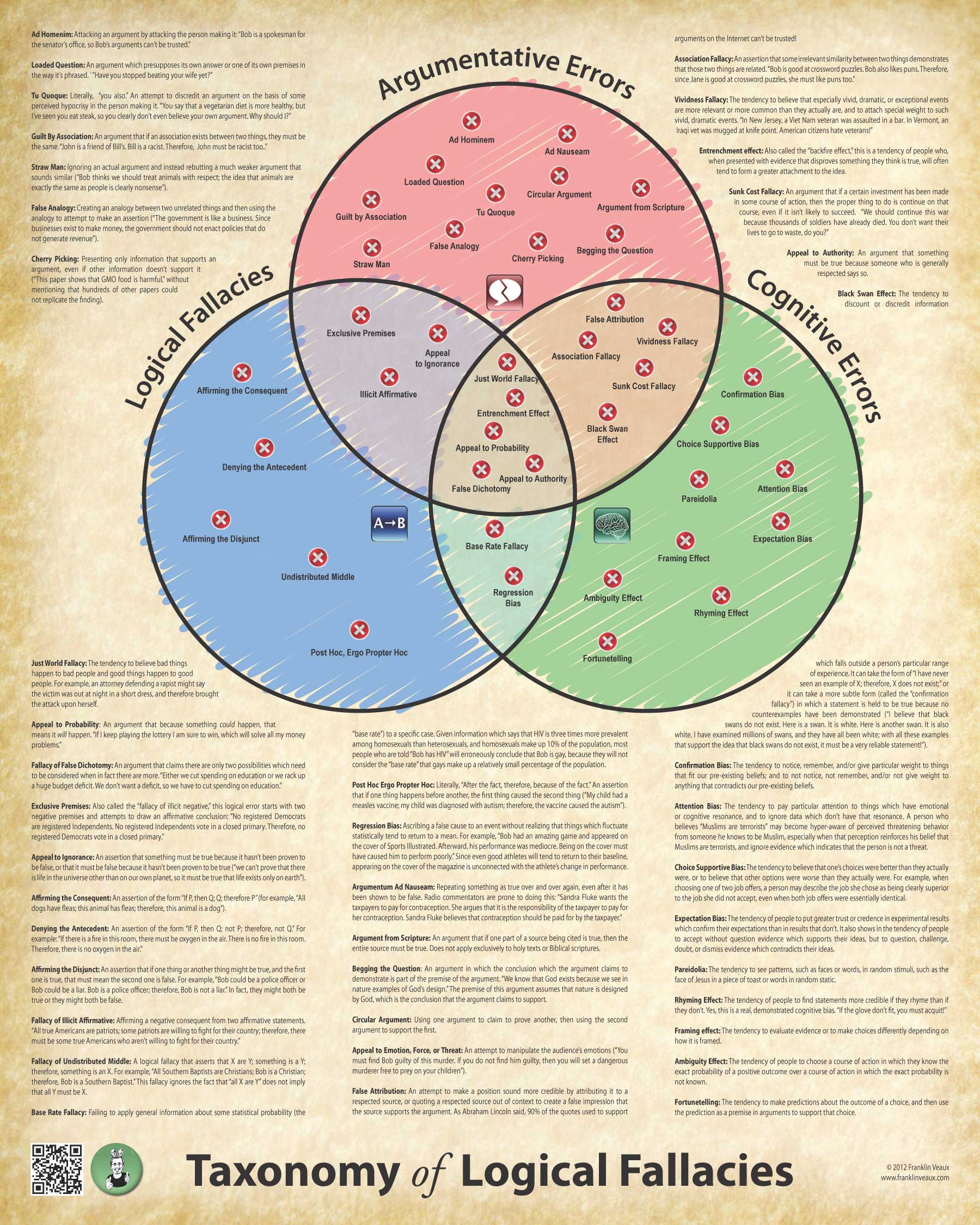
Following http://lesswrong.com/lw/bwo/logical_fallacy_poster/ some people complained about
Yet this poster has ONE key difference with the ideal poster, it exists.
If it sparks criticisms that lead to a new, LessWrong compatible poster, then it is well worth the critics.
The obvious next step then is to make a poster that would allow to take into account such well founded suggestion and synthesize the LessWrong lessons visually.
In your opinion then what would be a good structure, e.g. a hierarchy of fallacies, and a design theme?