I'm a bit fuzzy about what counts as signalling and what doesn't, but I think it covers more cases than those involving conscious planning.
But anyway, I'd say you care about about animals because you're a kind person, but that humans tend to be kind mostly because evolutionarily it's been a benefit by facilitating cooperation and reciprocation. I don't know whether evolution just implemented "be kind to everything" instead of just humans because it took less lines of code (kindness to animals as spandrel), or whether kindness to animals was deliberately implemented because of it's signaling value (it may not be hard-coded, but just learnt as children).
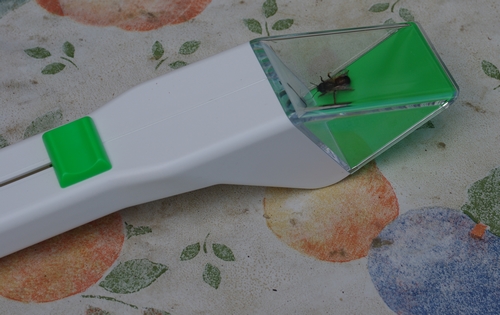
(For what it's worth, I tend to save small bugs and throw them out of the window instead of killing them, which my wife would prefer. This device is convenient for safely and easily catching bugs, and observing them!)
I have misunderstood your initial comment -- it sounded to me like you were saying humans don't really care about animals, but often find it desireable to signal that they do. Thanks for clarifying!
The October 2011 Scientific American has an editorial from its board of editors called "Ban chimp testing", that says: "In our view, the time has come to end biomedical experimentation on chimpanzees... Chimps should be used only in studies of major diseases and only when there is no other option." Much of the knowledge described in Luke's recent post on the cognitive science of rationality would have been impossible to acquire under such a ban.
I encourage you to write to Scientific American in favor of chimp testing. Some points that I plan to make:
I also encourage you to adopt a tone of moral outrage. Rather than taking the usual apologetic "we're so sorry, but we have to do this awful things in the name of science" tone, get indignant at the editors who intend to harm uncountable numbers of innocent people. For advanced writers, get indignant not just about harm, but about lost potential, pointing out the ways that our knowledge about how brains work can make our lives better, not just save us from disease.
You can comment on this here, but comments are AFAIK not printed in later issues as letters to the editor. Actual letters, or at least email, probably have more impact. You can't submit a letter to the editor through the website, because letters are magically different from things submitted on a website.
ADDED: Many people responded by claiming that banning chimp experimentation occupies some moral high ground. That is logically impossible.
To behave morally, you have to do two things:
1. Figure out, inherit, or otherwise acquire a set of moral goals are - let's say, for example, to maximize the sum over all individuals i of all species s of ws*[pleasure(s,i)-pain(s,i)].
2. Act in a way directed by those moral goals.
If you really cared about the suffering of sentient beings, you would also care about the suffering of humans, and you would realize that there's a tradeoff between the suffering of those experimented on, and of those who benefit, which is different for every experiment. That's what a moral decision is—deciding how to make a tradeoff of help and harm. People who call for a ban on chimp testing are really demanding we forbid (other) people from making moral judgements and taking moral actions. There are a wide range of laws and positions that could be argued to be moral. But just saying "We are incapable of making moral decisions, so we will ban moral decision-making" is not one of them.