Supermen of the (Not so Far) Future
Despite being fairly well established as a discipline, genetics is a science that has yet to reach its potential, both policymakers and the general population are extremely skeptical of it and, as a consequence, our society has setup several barriers to prevent its flourishing. In this post I will try to imagine what the potential benefits of embracing genetics and bioengineering are for humanity, in the present as well as in the near future. Gene editing and genetic engineering are well developed techniques that have been commercially available for a while. Despite this human genetic enhancements are almost completely unavailable and even for our domesticated species they are hard to come by. A number of genetic diseases are well characterized and could be fixed with this techniques, this would give reproductive options for a lot of people as well as diminishing the frequency of morbid conditions in future generations (for whom this represent both an improvement in quality of life as well as a reduction in healthcare expenses). A number of mutations that could constitute “genetic enhancements” are also known, most of these are aminoacid substitutions that can be performed with the editing of a single DNA base, here are some of them: Several variations in the genes MSTN, ACTN3, MYG, EPO, VEGFC can significantly enhance athletic performance, knockout of the myostatin gene gives individuals skeletal muscles that grow naturally without exercise and can likely halt the loss of muscle mass and strength that comes with old age. Mutations in the control sequences of the IGF1 gene are known to also improve athletic performance as well as confer strong resistance to metabolic diseases (a very important cause of death in the developed world). A single substitution in the LRP5 sequence produces very strong bones that are believed to not weaken with age. Knockout of the PRNP gene makes individuals completely immune to prion diseases. Prion diseases are caused by aggregati
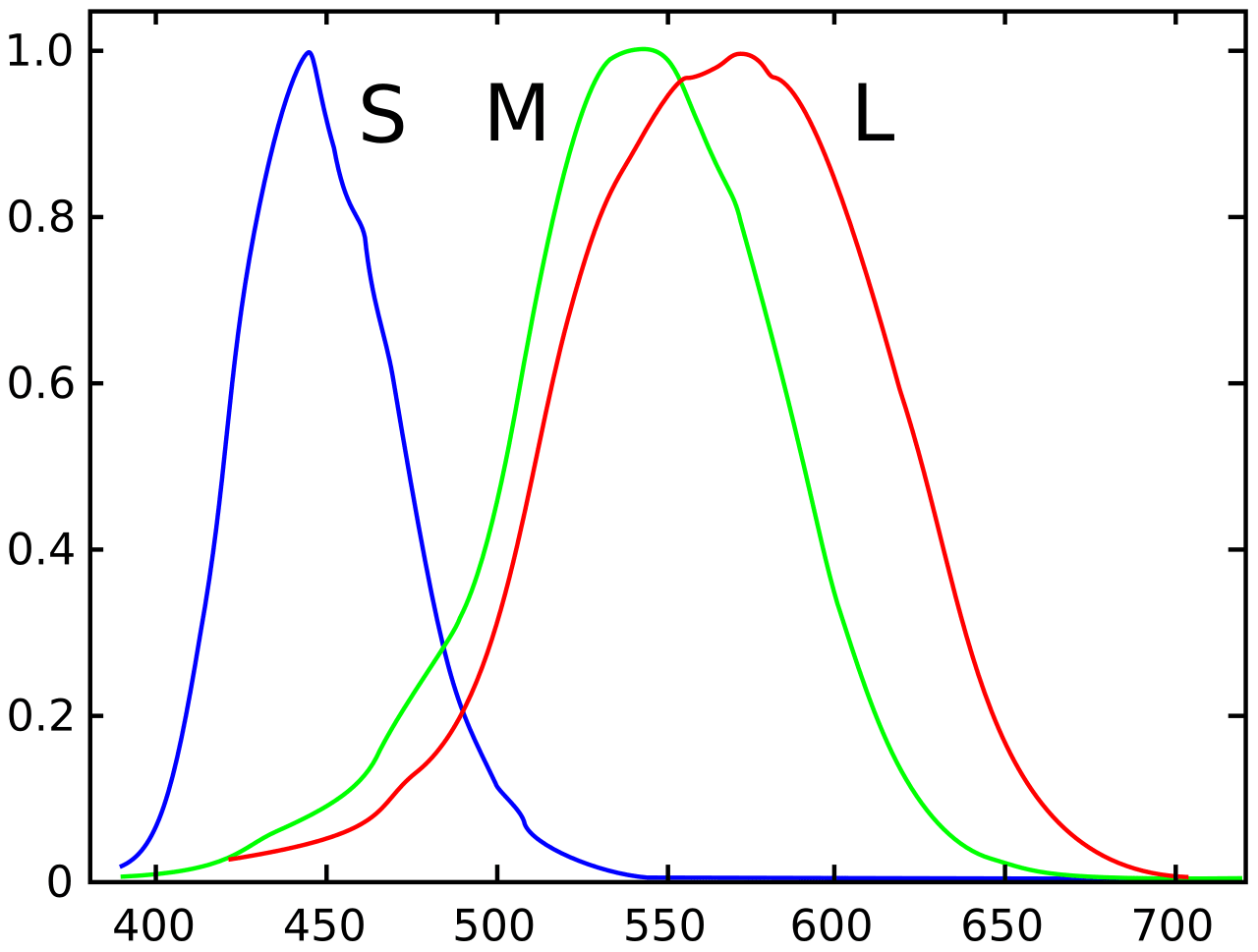

There is genetic evidence that some people might be natural tetrachromats, though as far as I know only one case has been confirmed, sort of. If this is true these people would have an additional Q type cone cell, with responsivity in the visible spectrum (so they don't see UV). The mean responsivity of Q cells is in between M and L cells with heavy overlaps, so many of these new color qualia are also inaccessible.
I think it'd be more interesting to expand the frequencies that humans can see rather than just add a new color among the current visible spectrum. Many birds and flowers possess features with colors in the UV which we cannot appreciate right now. Also, squeezing more peaks inside the visible spectrum without expanding it might be difficult if we also want to keep these curves decetly separated.