This week on the slack: http://lesswrong.com/r/discussion/lw/mpq/lesswrong_real_time_chat/
I recently laid myself out on train tracks but chickened out on getting struck by a train out of concern that train might be designed to mangle trespasses without killing them. My new antidepressants don't seem to be doing particularly anything, I don't enjoy basically anything and I feel hollow constantly. I just want to feel. And the thought that motivates most things I do creeps up and says: 'why don't you try something new? maybe it will change things?'. And I blindly follow that thought into a new dilemma. Later that night (incidentally, bi awareness ...
What Does the Future Hold for Kim Suozzi's Cryogenically Frozen Brain?
http://www.alternet.org/personal-health/what-does-future-hold-kim-suozzis-cryogenically-frozen-brain
Where can one find information on the underlying causes of phenomena? I have noticed that most educational resources discuss superficial occurrences and trends but not their underlying causes. For example, this Wikipedia article discusses the happenings in the Somali Civil War but hardly discusses the underlying motivations of each side and why the war turned out how it did. Of course, such discussions are often opinionated and have no clear-cut answers, perhaps making Wikipedia a sub-optimal place for them.
I know LW might not be the best place to ask thi...
Possibly the most enthusiastic / impressive endorsement I've ever seen for a rationality-type book:
Every country should scrap a year or two of math education and require all citizens to read this book instead.
Jonathan Haidt praising Mindware: Tools for Smart Thinking by Richard Nisbett
Anybody read the book? Do you agree with Haidt?
Very interesting paper: Eric Schwitzgebel, 1% Skepticism. What's the probability that some form of radical skepticism is correct? And can that have any practical ramifications?
Some interesting information about omega-3 in the diet: it seems that the Inuit (whose traditional diet includes huge amounts of omega-3) have genetic adaptations in their fatty acid metabolism.
[Link] Scott Adams' The Persuasion Reading List
Scott Adams' apparently has a his own version of the sequences and even has structured it into steps that bridge the inferential gap to the points he wants to get across. I notice that there is some self-promotion but overall it seems like a sensible list. What do you think?
What literature is available on who will be given moral consideration in a superintelligence's coherent extrapolated volition (CEV), and how much weight each agent will be given?
Nick Bostrom's Superintelligence mentions that it is an open problem as to whether AIs, non-human animals, currently deceased people, etc should be given moral consideration, and whether the values of those who aid in creating the superintelligence should be given more weight than that of others. However, Bostrom does not actually answer these questions, other than slightly advoca...
How Soylent and Oculus Could Fix The Prison System
here’s one way we could rebuild the prison system:
Step 1: Soylent
Step 2: Oculus Rift
Step 3: Health and hygiene
Step 4: A simulation that rewards good behavior
Step 5: Administration
Excerpt:
...Prisoners have cellmates and gym time and free time in the prison yard because solitary confinement makes you go nuts. You need human contact if you don’t want to pop out of prison a crazy person. The problem is these places are where all the violence happens.
However, you could take the fear factor out of prisons by s
I'm curious which of the two major political parties in the US (and left wing vs. right wing parties more generally) people think is most likely to reduce existential risk. My current view is that the Democrats (and parties of the left) are since they're more likely to favor policies which reduce the threat of climate change (a tail end existential risk and a potential destabilizing force) and are more likely to favor nuclear non-proliferation. However, I know my own opinions might be biased by the fact that I agree with left wing parties on most other less important issues. Which party do you think would do the most to reduce existential risk and how substantial do you think the difference is?
the two major political parties in the US (...) people think is most likely to reduce existential risk
No comment on the main question, but if you really care about an issue you should try like hell to prevent it from becoming a wedge issue. There's no longer any meaningful discussion of AGW in the US, because it's now a wedge issue. Even if you observe a huge correlation between political tribal affiliation and getting the "right answer", you should never point this out. Once people start to absorb their position on a topic into their self-image, they will never change their minds about it.
Answers to this are going to have to depend on politically sensitive judgements, I think, because most of the impact of politicians on existential risk will be indirect and involve things like the overall prosperity of the nation they're leading. Let's look at some classes of existential risk:
I would also add the Cuban Missile Crisis to the list of things to fear, where (as I perceive it) the Soviets thought the Americans would fold, and then the Americans escalated. Being tough but not being perceived as tough is a serious failure mode!
Two more ways of saying the same thing:
The success of a particular mainstream political party in the US is not a variable that noticeably affects existential risk. None of the parties would do much anything to reduce the existential risk.
Mu
Brave New World, Chapter 17:
ART, SCIENCE–you seem to have paid a fairly high price for your happiness," said the Savage, when they were alone. "Anything else?"
"Well, religion, of course," replied the Controller. "There used to be something called God–before the Nine Years' War. But I was forgetting; you know all about God, I suppose."
"Well …" The Savage hesitated. He would have liked to say something about solitude, about night, about the mesa lying pale under the moon, about the precipice, the plunge into shado...
I have a casual interest in religious conversion as an empirical psychological phenomenon. The philosopher William James makes the case for studying religious experience empirically in one of his books published over a century ago - The Varieties of Religious Experience - so the idea has circulated for quite a while.
I think we might have an example of an internet figure undergoing an Augustinian sort of spiritual crisis documented online, namely the pickup artist Roosh Valizadeh. Roosh has posted and said lately that he doesn't enjoy his sexual conquests a...
we have empirical evidence
No, we have only some correlations where obvious third factors (e.g. IQ) are involved. If you want to take this approach, just being black strongly "damages ... ability to form stable marriages".
It seems that "correlation != causation" hasn't been repeated enough X-/
P.S. Not to mention that "stable marriages" doesn't look like a terminal goal to me. If that's all you want, just forbid divorce.
Oh, I forgot to add to the post below another source of my science-fictional view of sexual relationships: Robert Ettinger's nonfiction book Man Into Superman, which I read at the impressionable age of 14 in 1974. Scroll down to page 68, "Transsex and Supersex":
http://www.cryonics.org/images/uploads/misc/ManIntoSuperman.pdf
Brave New World, Chapter 17:
ART, SCIENCE–you seem to have paid a fairly high price for your happiness," said the Savage, when they were alone. "Anything else?"
"Well, religion, of course," replied the Controller. "There used to be something called God–before the Nine Years' War. But I was forgetting; you know all about God, I suppose."
"Well …" The Savage hesitated. He would have liked to say something about solitude, about night, about the mesa lying pale under the moon, about the precipice, the plunge into shadowy darkness, about death. He would have liked to speak; but there were no words. Not even in Shakespeare.
The Controller, meanwhile, had crossed to the other side of the room and was unlocking a large safe set into the wall between the bookshelves. The heavy door swung open. Rummaging in the darkness within, "It's a subject," he said, "that has always had a great interest for me." He pulled out a thick black volume. "You've never read this, for example."
The Savage took it. "The Holy Bible, containing the Old and New Testaments," he read aloud from the title-page. "Nor this." It was a small book and had lost its cover.
"The Imitation of Christ."
"Nor this." He handed out another volume.
"The Varieties of Religious Experience. By William James."
"And I've got plenty more," Mustapha Mond continued, resuming his seat. "A whole collection of pornographic old books. God in the safe and Ford on the shelves." He pointed with a laugh to his avowed library–to the shelves of books, the rack full of reading-machine bobbins and sound-track rolls.
"But if you know about God, why don't you tell them?" asked the Savage indignantly. "Why don't you give them these books about God?"
"For the same reason as we don't give them Othello: they're old; they're about God hundreds of years ago. Not about God now."
"But God doesn't change."
"Men do, though."
"What difference does that make?"
"All the difference in the world," said Mustapha Mond. He got up again and walked to the safe. "There was a man called Cardinal Newman," he said. "A cardinal," he exclaimed parenthetically, "was a kind of Arch-Community-Songster."
"'I Pandulph, of fair Milan, cardinal.' I've read about them in Shakespeare."
"Of course you have. Well, as I was saying, there was a man called Cardinal Newman. Ah, here's the book." He pulled it out. "And while I'm about it I'll take this one too. It's by a man called Maine de Biran. He was a philosopher, if you know what that was."
"A man who dreams of fewer things than there are in heaven and earth," said the Savage promptly.
"Quite so. I'll read you one of the things he did dream of in a moment. Meanwhile, listen to what this old Arch-Community-Songster said." He opened the book at the place marked by a slip of paper and began to read. "'We are not our own any more than what we possess is our own. We did not make ourselves, we cannot be supreme over ourselves. We are not our own masters. We are God's property. Is it not our happiness thus to view the matter? Is it any happiness or any comfort, to consider that we are our own? It may be thought so by the young and prosperous. These may think it a great thing to have everything, as they suppose, their own way–to depend on no one–to have to think of nothing out of sight, to be without the irksomeness of continual acknowledgment, continual prayer, continual reference of what they do to the will of another. But as time goes on, they, as all men, will find that independence was not made for man–that it is an unnatural state–will do for a while, but will not carry us on safely to the end …'" Mustapha Mond paused, put down the first book and, picking up the other, turned over the pages. "Take this, for example," he said, and in his deep voice once more began to read: "'A man grows old; he feels in himself that radical sense of weakness, of listlessness, of discomfort, which accompanies the advance of age; and, feeling thus, imagines himself merely sick, lulling his fears with the notion that this distressing condition is due to some particular cause, from which, as from an illness, he hopes to recover. Vain imaginings! That sickness is old age; and a horrible disease it is. They say that it is the fear of death and of what comes after death that makes men turn to religion as they advance in years. But my own experience has given me the conviction that, quite apart from any such terrors or imaginings, the religious sentiment tends to develop as we grow older; to develop because, as the passions grow calm, as the fancy and sensibilities are less excited and less excitable, our reason becomes less troubled in its working, less obscured by the images, desires and distractions, in which it used to be absorbed; whereupon God emerges as from behind a cloud; our soul feels, sees, turns towards the source of all light; turns naturally and inevitably; for now that all that gave to the world of sensations its life and charms has begun to leak away from us, now that phenomenal existence is no more bolstered up by impressions from within or from without, we feel the need to lean on something that abides, something that will never play us false–a reality, an absolute and everlasting truth. Yes, we inevitably turn to God; for this religious sentiment is of its nature so pure, so delightful to the soul that experiences it, that it makes up to us for all our other losses.'" Mustapha Mond shut the book and leaned back in his chair. "One of the numerous things in heaven and earth that these philosophers didn't dream about was this" (he waved his hand), "us, the modern world. 'You can only be independent of God while you've got youth and prosperity; independence won't take you safely to the end.' Well, we've now got youth and prosperity right up to the end. What follows? Evidently, that we can be independent of God. 'The religious sentiment will compensate us for all our losses.' But there aren't any losses for us to compensate; religious sentiment is superfluous. And why should we go hunting for a substitute for youthful desires, when youthful desires never fail? A substitute for distractions, when we go on enjoying all the old fooleries to the very last? What need have we of repose when our minds and bodies continue to delight in activity? of consolation, when we have soma? of something immovable, when there is the social order?"
"Then you think there is no God?"
"No, I think there quite probably is one."
"Then why? …"
Mustapha Mond checked him. "But he manifests himself in different ways to different men. In premodern times he manifested himself as the being that's described in these books. Now …"
"How does he manifest himself now?" asked the Savage.
"Well, he manifests himself as an absence; as though he weren't there at all."
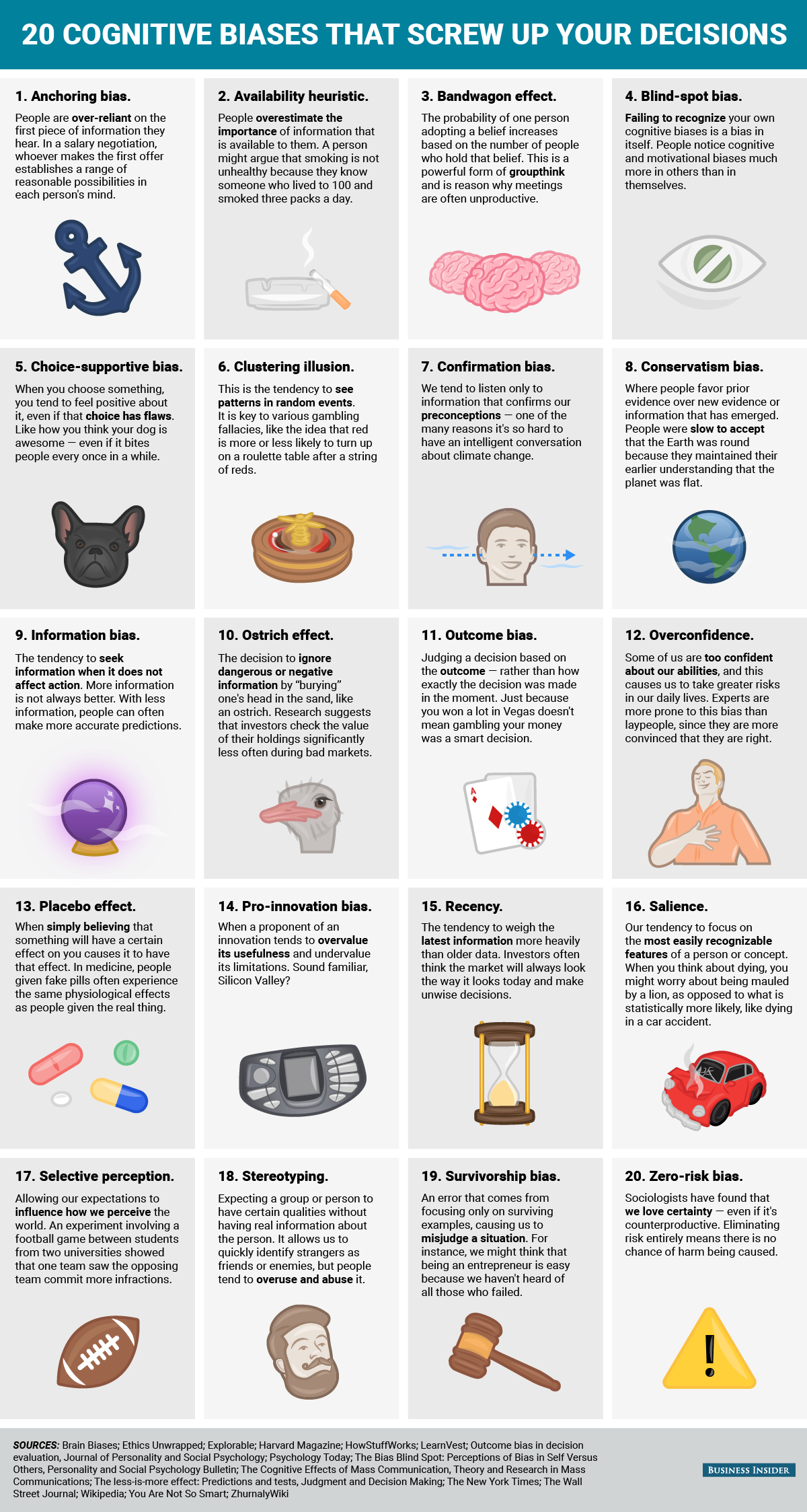
If it's worth saying, but not worth its own post (even in Discussion), then it goes here.
Notes for future OT posters:
1. Please add the 'open_thread' tag.
2. Check if there is an active Open Thread before posting a new one. (Immediately before; refresh the list-of-threads page before posting.)
3. Open Threads should be posted in Discussion, and not Main.
4. Open Threads should start on Monday, and end on Sunday.