This is a linkpost for http://theconversation.com/biofuels-turn-out-to-be-a-climate-mistake-heres-why-64463
Sure corn isn't the optimal crop to do this with. What about water based plants or algae which have more efficient photosynthesis? Algae has very short generation times and could perhaps be bred to produce biofuel directly, instead of an inefficient indirect process of fermenting it.
If I recall correctly, you would only need a relatively small percent of Earth's surface to produce enough fuel for current use. And it could be some undesirable land in a desert. Tubes full of water and algae is a lot cheaper than solar panels and batteries.
The linked paper is only about current practices, their benefits and harms. You're right though, about the need to address ideal near-term achievable biofuels and how they stack up against the best (e.g.) near-term achievable solar arrays.
Growing crops for biofuel cannot produce more carbon than it consumes over long time scales, because the only source of carbon available to the system is the carbon in the atmosphere. If they are saying biofuels aren't carbon neutral over long time scales, where is this extra unlimited supply of carbon coming from?
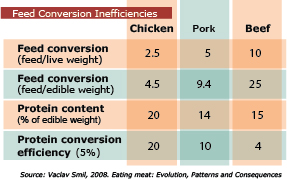
If people worked from home ( 80% of american workforce is employed in services so basically moving information around is their job) and tossed meat , North America alone could support something like 2 billions people...the amount of energy consumed by private transportation (15860 Trillion BTU) and commercial buildings (17993 Trillion BTU) is insane (33853 Trillion BTU) , in fact it's 34.7 % of the total energy consumption in the US (97350 Trillion BTU) , more insane is how haven't we tossed meat yet given how poorly it converts calories and proteins from feed