Is Bjorn Lomborg roughly right about climate change policy?
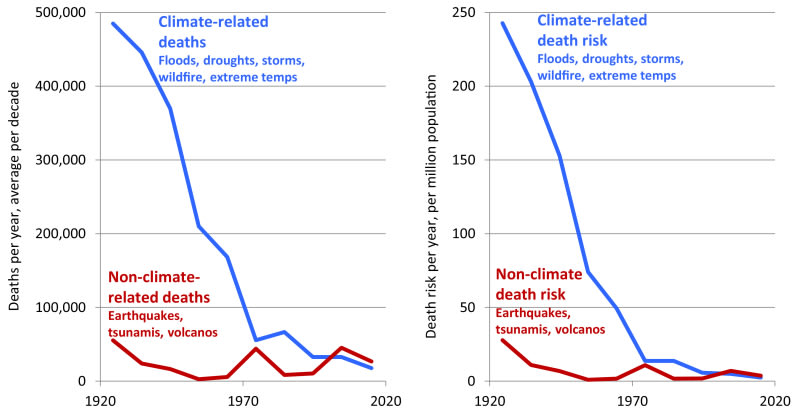
I recently came across Bjorn Lomborg’s 2020 article Welfare in the 21st century: Increasing development, reducing inequality, the impact of climate change, and the cost of climate policies. It runs counter to many things I have heard about climate change. For example, it contains the below chart, which I found very surprising: The abstract reads: > Climate change is real and its impacts are mostly negative, but common portrayals of devastation are unfounded. Scenarios set out under the UN Climate Panel (IPCC) show human welfare will likely increase to 450% of today's welfare over the 21st century. Climate damages will reduce this welfare increase to 434%. > > Arguments for devastation typically claim that extreme weather (like droughts, floods, wildfires, and hurricanes) is already worsening because of climate change. This is mostly misleading and inconsistent with the IPCC literature. For instance, the IPCC finds no trend for global hurricane frequency and has low confidence in attribution of changes to human activity, while the US has not seen an increase in landfalling hurricanes since 1900. Global death risk from extreme weather has declined 99% over 100 years and global costs have declined 26% over the last 28 years. > > Arguments for devastation typically ignore adaptation, which will reduce vulnerability dramatically. While climate research suggests that fewer but stronger future hurricanes will increase damages, this effect will be countered by richer and more resilient societies. Global cost of hurricanes will likely decline from 0.04% of GDP today to 0.02% in 2100. > > Climate-economic research shows that the total cost from untreated climate change is negative but moderate, likely equivalent to a 3.6% reduction in total GDP. > > Climate policies also have costs that often vastly outweigh their climate benefits. The Paris Agreement, if fully implemented, will cost $819–$1,890 billion per year in 2030, yet will reduce emissions by just 1% of what is n
Regulation is probably the main reason. See, for example, https://www.instituteforenergyresearch.org/nuclear/regulations-hurt-economics-nuclear-power/.