Designing for a single purpose
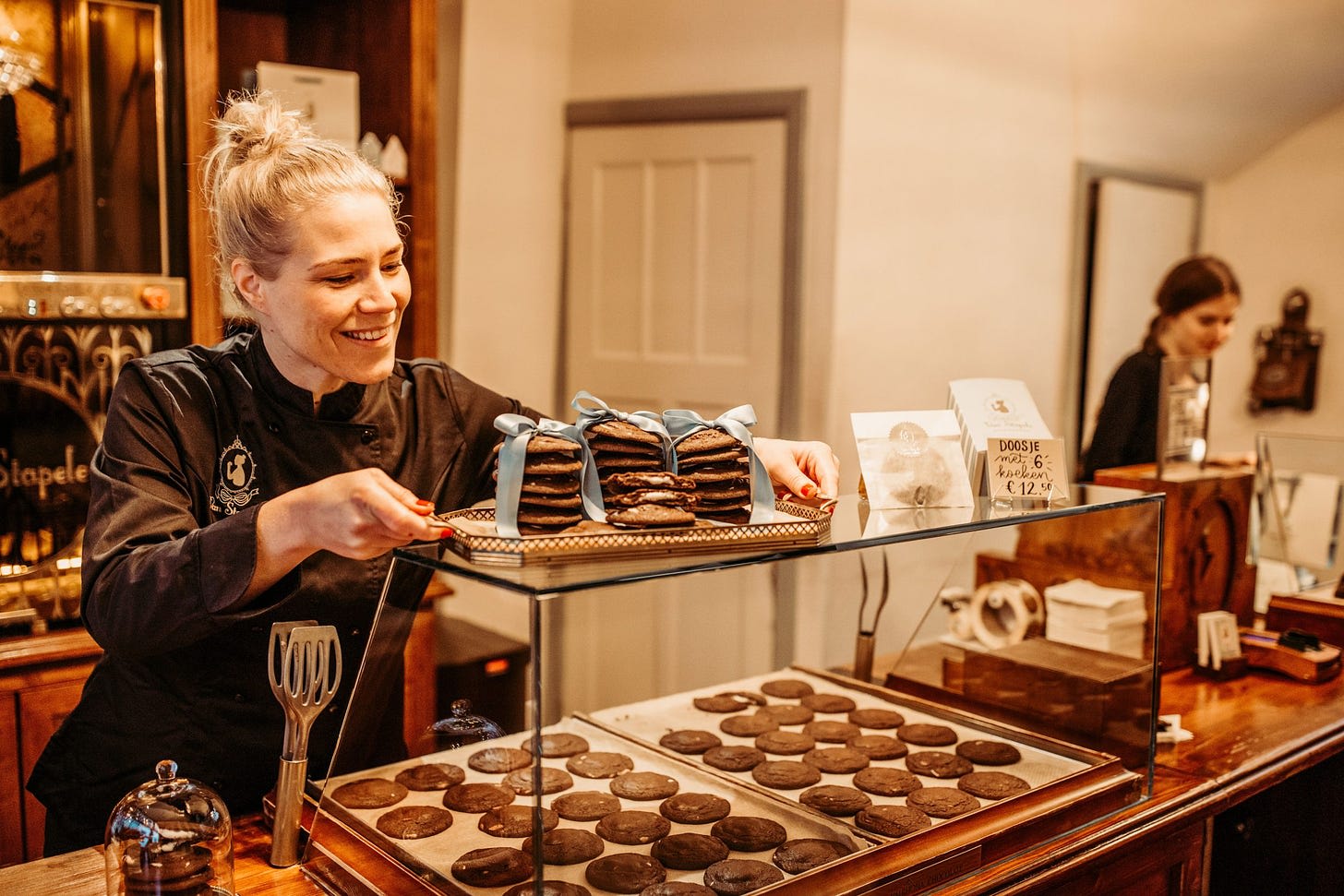
If you’ve ever been to Amsterdam, you’ve probably visited, or at least heard about the famous cookie store that sells only one cookie. I mean, not a piece, but a single flavor. I’m talking about Van Stapele Koekmakerij of course—where you can get one of the world's most delicious chocolate chip cookies. If not arriving at opening hour, it’s likely to find a long queue extending from the store’s doorstep through the street it resides. When I visited the city a few years ago, I watched the sensation myself: a nervous crowd awaited as the rumor of ‘out of stock’ cookies spreaded across the line. Owner Vera Van Stapele with fresh-baked cookies, via store website The store, despite becoming a landmark for tourists, stands for an idea that seems to be forgotten in our culture: crafting for a single purpose. In the tech scene where I’m coming from, and which you might too, this approach is often perceived as singular, and not in its positiveness. We’ve been taught to go big or go home—raise millions in funding, build a big company, hire more and more employees, and hope for the desired exit. Anything less is considered a mind of a failure. From a personal perspective I’ve seen this attitude in almost every branding session I ran with startup founders. Again and again, they struggled to distill their primary focus. Moreover, when discussing competitors, it often seemed their startup competed in every possible field. In a way, that fear of committing reflects the human nature of FOMO—deliberately giving up on something(s) and experiencing the potential loss of other benefits. This mindset has also seeped into our collective body of work, especially in software. A product, which often starts as a weird small creature, gradually evolves into a multi-arm octopus, which sadly became the norm for VCware1. And so we’ve been left with bloated, bigger, and… worse software. The idea of maintaining a small scope in product has already appeared in my writing in various forms;