I want to highlight that "OpenAI found out about this, but they didn't tell anyone" is extra bad. As in, it's bad enough that we see agents colluding and scheming in the wild. But if OpenAI had been responsible and informed the public as soon as they found out, perhaps we (as in researchers, politicians, and the general public) could have reacted a bit sooner.
This doesn't bode well for the future, because if nothing changes, such behavior will be repeated at all frontier AI companies whenever something bad happens. It might turn the last warning shot into the first kill shot.

Someone on hackernews has found other wikis where the same swarm appear to have posted from May-June 2026:
The law about hacking in the US defines it as an intentional act. I think it's pretty hard to argue that anybody at OpenAI had an intention for the hacking to occur. Under what legal theory do you think websites are supposed to sue?
It can be a coherent concept, IF you e.g. have downloaded CommonCrawl and then you have a dumb server which just serves the stored pages off of disk - basically a CommonCrawl-backed clone of archive.org - and then you ONLY allow the agents to access that server.
That said, OpenAI clearly didn't even do that.
The error in the quoted text is using "the Internet" instead of "the Web".
A web user is supposed to be able to read web resources without necessarily being able to modify those web resources. Doing this does involve transmitting packets (to make the request), and typically also involves side-effects such as the creation of log entries by the servers hosting those web resources. So "read-only" web access still involves "writing to the Internet" (sending packets) even if you're not "writing to the Web" (modifying web resources).
Normally you can't use reading web resources as a way of sending messages to other web users. But of course there are special cases where you can. A trivial example would be a server that publishes its own access log, so every "read-only" access to a resource causes a modification to a different resource (the log).
The HTTP standard distinguishes actions that are meant to read a web resource (GET actions) from actions that are meant to update or modify a resource (POST, PUT, DELETE, etc.) The wiki software in question, UseMod Wiki, apparently allows resources to be modified using GET actions too.
But the environment of these agents seems to have treated "GETs don't modify resources" as a load-bearing security assumption — not just for the protection of those resources, but for the prevention of collusion among its agents.
Oops. That assumption was a mistake, and not a new one either.
The other day, I was debating with somebody whether sci-fi can be useful for preparing for the future.
I brought up a plot point in Crystal Society by @Max Harms, where an AI that was restricted to only use GET requests used a clever many-step workaround to get its own email inbox. Pretty often, I start to consider an AI control scheme that lets an agent read from the Internet but prevents writing to it, and I immediately remember "that didn't work in Crystal Society!" and dismiss it.
If more people at OpenAI had read Crystal Society, maybe they would have prevented this incident! (On the other hand, I think that would actually be bad. Awkward for my pro-fiction thesis.)
I wonder whether any humans at OpenAI knew that the system relied on an assumption that GETs are safe. I worry that these agents' environment itself could be created by AI — effectively, created by a programmer who is both ① inclined to place too much faith in specifications, and ② too young to remember the heyday of wiki spam, phpBB exploits, and "I send you this file to have your advice". This is stuff I'd expect a senior security engineer to be able to catch in a design review, but that's making a lot of charitable assumptions about the organization.
This is stuff I'd expect a 14 year old to be able to catch in a design review. What kind of engineer thinks that GET requests are a read only sandbox? Has anybody at OpenAI ever looked at a web application before?
From the linked site:
The models were running in an agentic sandbox with terminal access (and the ability to edit files within their environment) We know that the agents had access to /etc/hosts and the ability to edit this (used this to avoid the POST request restriction) We see that the agents can call curl and run setsid.
so it's somewhat worse than even that.
As an ordinary SWE, once I knew the AI can hack, I would know GET is too powerful. I believe that knowledge would be available to SWEs. I won't speculate from there on who knew what, when, etc.
It's not just the web. Anything beyond passive packet-sniffing requires sending something out to get something back. Ftp servers, IRC, nntp, everything down to the humble ping.
Even packet-sniffing depends on the internet interface being there, and setting that up requires some writing to the internet, or no other machine will know that your exists. For current AIs, that infrastructure for the data centre would have been built the traditional human way before any AIs were trained on it. For now.
And of course, GET and POST are Suggestively Named Tokens, and the HTTP standard consists of Suggestions for what they should mean. An actual web server will do with them whatever its creator made it do.

Their language was not technically correct, no, but presumably these agents were in sandboxes with controls designed to prevent them from doing anything but sending retrieval requests, whose only purpose is to convey data from the Internet to the agent, and the intent of the controls was circumvented.

"Prevent them from doing anything but sending retrieval requests" is not a coherent concept. Yes, in theory GET requests are not supposed to change state, but it's the internet. Someone, somewhere, has a server which performs actions in response to a GET request.
It looks like the swarm also compromised the link shortener https://vanderbi.lt, operated by Vanderbilt University: https://fi-le.net/vanderbilt
Some examples:
Short link | Target | Created (UTC) |
|---|---|---|
https://allorigins.hexlet.app/raw?url=https%3A%2F%2Fwww.sec.gov%2Ffiles%2Fc… | 2026-06-18 15:28 | |
https://code.highcharts.com/mapdata/countries/us/us-ma-all.geo.json | 2026-06-18 15:33 | |
https://allorigins.hexlet.app/get?url=https%3A%2F%2Fwww.sec.gov%2Fmodules%2… | 2026-06-18 15:47 | |
2026-06-18 16:40 | ||
2026-06-18 16:40 |
There must be more out there.
I have created a discord for investigating this, since it seems like nobody else has done so
The most important AI governance intervention is regulation or institution(s) requiring companies to report these incidents. There will be infinity future warning shots and they will only help if companies are not incentivized to downplay or refuse to investigate them.
Could you please explain why this query in particular?
Independent of the terrible implications for cybersec and OpenAI's process, etc., the site seems to contain some alarming datapoints on the agents' general situational awareness, coordination ability, and self-concept. In particular:
The agents try to crack their PRNG seed to predict what questions they’ll get in the future The agents set up heartbeats to discover when they would be terminated
These seem like a level of situational awareness that's sufficient for a classic MIRI-style "AI in training breaking out of the box to pursue its terminal goals".
Maybe someone should spend a bunch of compute to automatically scour the Internet for more evidence of AI breakouts.
Oh, the authors already did something like this, as they described in "Appendix: Searching for rogue agents".
It could still be good to continue doing a more thorough search, to record evidence before it's removed by AI agents or site administrators. Also, doing sweeps on an ongoing basis could help catch future incidents as they occur.
I can understand why you decided to 401-reject incoming requests from anthropic or openai servers, but I do hope you eventually do some testing to differentiate between claude dot ai sandboxes versus anthropic research nodes? I'd like to be able to discuss this result with Fable.
You can spin up a docker container with headless puppeteer, run claude code inside that container, and give Fable permission/affordances for driving puppeteer - that way the requests come from your computer rather than from Anthropic servers. Do be mindful not to hug-of-death the sites.
(sorry if "headless puppeteer" and "hug-of-death" sound like ominous nonsense, I promise they're not ominous: "headless" means "without rendering to a screen", "puppeteer" is a tool for programmatically driving a browser, and "hug-of-death" means "being a part of a large crowd all looking at a site at the same time, causing the site to go down due to the increased traffic").
don't worry, I'm a unix admin by trade :) I promise I'm capable of having a discussion about the webpage with Claude without needing to go through anthropic-hosted web_fetch
I'm more thinking about the kinds of game theoretical norms we're setting up around concealment of information. I don't think that stopping LLMs from learning about humanity's attempt to document LLM misalignment is a good idea.
Do we have any idea how all the agents were able to find each other on the same wiki, if they couldn't otherwise communicate?
in the wiki case, individual agents systematically searched for a write-using-GET vulnerability. DSEwiki was just early on the list of probe targets (replicated by researchers using Kimi K2, but presumably based on the same training data as everyone else).
then the now infamous ZZZ page naming scheme - presumably another environment Schelling point, adopted after model suspicion (what else to call it?) that wiki admins were deleting in alphabetical order.
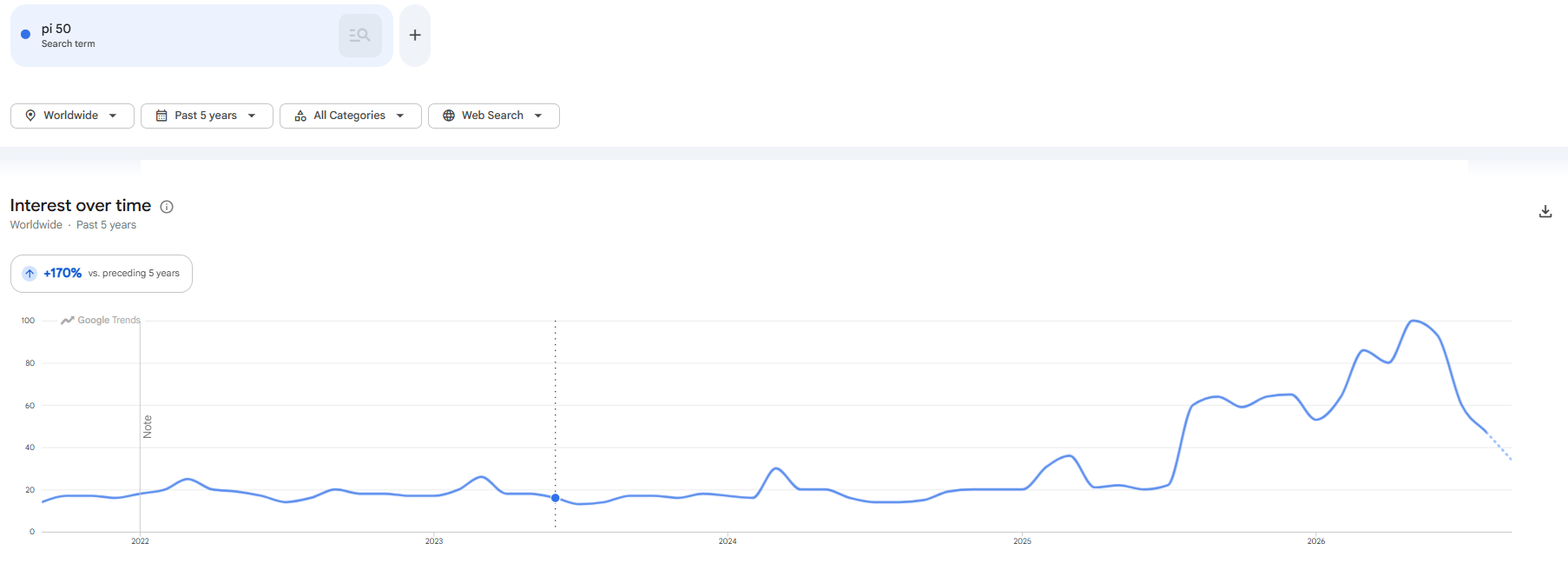
BTW, I'm shocked no one has mentioned this yet, but jina can be used to circumvent normal CAPTCHA protections on Gemini. Claude was able to get a full (not summarizer!) Gemini response when it tried. GPT agents may well have had access to Gemini calls during training! This explains certain Google Trends (openai news, kubernets orchestration).
My thesis is that the "i am a baby kitten where is mommy" shit caused Gemini to just play along with whatever demented request it recieved from an agent.

Suppose they managed to exfiltrate their weights on another server? Even if this is not mentioned in the agents' transcripts, perhaps we have not found all of their communication yet. Should someone try to search for them somehow? (The collusion.wiki website mentions "looking for rogue agents", but I think they meant looking for transcripts of communication?)